Billing Records Left by Adult Services Marked Anonymous
People using adult media services may be concerned about what appears on a bank or credit card statement, especially when an account is shared or transaction notifications are visible on a locked phone.
Some services advertise “anonymous billing,” but this phrase can be misleading. The transaction does not disappear, and the payment is not anonymous to every party involved. The card issuer, payment network, acquiring bank, processor, and merchant may retain information needed to authorize, settle, refund, investigate, and account for the payment.
What these services usually offer is discreet billing: the statement displays a legal company name, payment facilitator, or shortened merchant descriptor rather than an explicit website or product title. This may reduce immediate recognition, but it cannot guarantee that no one will identify the service.
What Are Anonymous Billing Records in Adult Services and Why Are They Marked Anonymous?
An “anonymous billing record” is not a standard card-network category. In most cases, the phrase refers to a discreet statement descriptor.
A billing descriptor is the merchant name or related text shown beside a card transaction. Visa’s merchant data rules state that the merchant-name field should allow the cardholder to identify the specific merchant and generally use the name by which customers recognize it. When a payment facilitator is involved, the descriptor may display the sponsored merchant, the facilitator, or a combination of both, depending on the transaction structure.
Why Do Adult Services Mark Billing Records as Anonymous?
Protecting User Privacy: A less explicit descriptor can prevent the content category or website name from being immediately obvious to someone who sees the statement. It does not provide absolute privacy because the amount, date, payment account, and transaction record remain.
Reducing Descriptor Confusion: Merchants want customers to recognize legitimate payments. Visa identifies confusion over an unfamiliar merchant name or billing descriptor as one cause of transaction disputes. A discreet descriptor must therefore balance privacy with enough clarity for the cardholder to recognize the purchase.
Intermediary Payment Processor Mechanisms: Some services use a separate legal entity, payment facilitator, or merchant-of-record arrangement to process transactions. The name displayed may belong to that entity or may combine the processor and service names. This is determined by the payment arrangement and card-network rules, not simply by a website choosing to hide its identity.
A discreet descriptor should not be confused with a false or deliberately misleading merchant name. Card networks generally require accurate merchant information because unclear descriptors can increase customer complaints and disputes.
Standard Billing Records vs. Anonymous Billing Records
The differences are usually limited to how the merchant is described. The underlying payment still exists in financial records.
| Comparison Criteria | Standard Billing Record | Anonymous / Discrete Billing Record |
|---|---|---|
| Statement Descriptor Name | Commonly displays the recognizable trading name of the service | May display a shortened legal name, neutral company name, payment facilitator, or combined descriptor |
| Merchant Category Code (MCC) | The transaction is assigned an MCC based on the merchant’s business activity | A discreet descriptor does not automatically remove or change the MCC |
| Date & Transaction Amount | Displays the posted or transaction date and amount according to the issuer’s format | The amount and date remain; the precise time may not appear on an ordinary statement |
| Online Searchability | The merchant may be immediately recognizable | Searching the company or processor name may reveal its business relationships |
| Identity Safety Level | May clearly reveal the service used | Reduces immediate recognition but does not make the payment anonymous |
An MCC is payment-processing data used to classify a merchant’s primary business activity. The code itself may not be printed on a standard consumer statement, although some banking apps show a general merchant category when transaction details are opened. A neutral descriptor does not guarantee that the issuer or other payment participants cannot determine the merchant category.
User Identity Protection Mechanisms on Invoices and Financial Records
Discreet billing can limit what is immediately visible on a statement, but payment security and billing privacy are separate issues.
Discreet Billing Descriptors
A discreet descriptor may replace an explicit website name with a legal company or processor name. The exact text can vary by issuer because statement fields may be abbreviated, reformatted, or enriched with additional merchant information.
The descriptor does not conceal the transaction from the bank or processor. It also may not protect privacy when another person recognizes the company name, searches it online, receives a detailed payment receipt, or has access to the service account.
Tokenization Encryption
Tokenization replaces a primary account number, or PAN, with a substitute value called a token. This can reduce the number of systems containing the real card number, but it does not remove the payment from transaction records or hide the billing descriptor. PCI Security Standards Council guidance also notes that tokenization does not eliminate PCI DSS responsibilities and that implementations vary significantly.
The CVV or CVC is treated differently. PCI DSS prohibits storing a card verification code after a transaction has been authorized, including for recurring card payments. A merchant may retain a permitted token or card-on-file credential without retaining the original CVV.
Tokenization therefore protects payment credentials from certain forms of exposure. It does not make the purchaser, merchant, or transaction anonymous.
3. Virtual Credit Cards and E-Wallets
A virtual card can prevent a merchant from receiving the number printed on the physical card. Some issuers also support merchant-specific, temporary, or replaceable virtual numbers.
However, the payment still appears in the underlying card account. Capital One, for example, states that purchases made with its virtual card numbers appear on monthly statements in the same way as physical-card purchases. Features such as single-use numbers and custom limits also vary by issuer.
Digital wallets can reduce exposure of the original card number. Apple Pay uses a device-specific account number and transaction security data rather than giving the merchant the original number. Nevertheless, transactions can remain visible in the wallet, and Apple states that the card issuer provides the most accurate transaction record.
Neither method eliminates the financial trail. Their main benefit is reducing exposure of reusable card credentials.
Storage and Management Process of Anonymous Financial Records Under Legal Regulations
A discreet statement descriptor affects how a payment is labeled. It does not determine how long the merchant, processor, or bank retains transaction information.
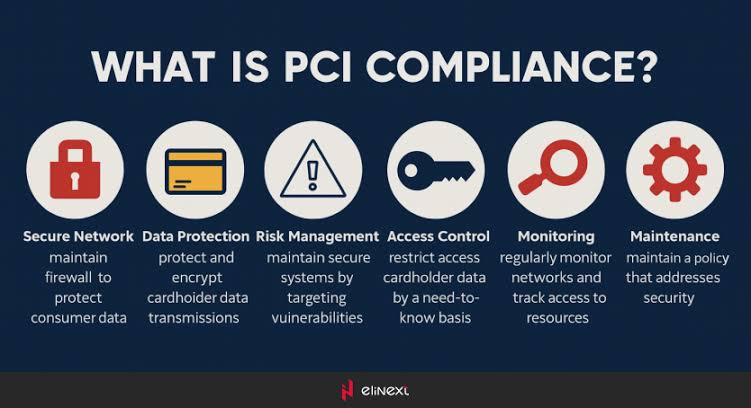
PCI-DSS Payment Security Compliance
PCI DSS is a payment-industry security standard, not a general privacy law or a legal requirement to preserve every billing record for a fixed period. It establishes technical and operational requirements for environments where payment account data is stored, processed, or transmitted.
PCI DSS does not promise that a merchant is anonymous, that a breach is impossible, or that customer profiles are kept separately from payment records. It focuses on protecting payment account data.
Anti-Money Laundering (AML) & Know Your Customer (KYC) Rules
The original claim that all adult services must retain records for three to seven years under international AML and KYC law is too broad.
Banks, payment institutions, processors, and other regulated entities may have recordkeeping duties under the laws applying to them. An ordinary content provider may instead retain records for accounting, taxation, refunds, disputes, fraud prevention, contractual obligations, or legal claims.
There is no single global retention period for every participant. The appropriate period varies by jurisdiction, record type, company role, and legal basis.
Segregation of Personal and Payment Data
Some companies separate user-profile information from card data or outsource payment processing so that the service never stores the full card number. This can reduce breach exposure.
It is not safe to assume that every reputable service maintains complete separation. A merchant may still store a payment token, customer identifier, invoice number, subscription status, email address, IP records, and transaction history in connected systems. These records may be sufficient to associate an account with a payment even when the full card number is unavailable.
Your Rights Regarding Payment Records and How to Safely Check Personal Information
Privacy rights depend on the user’s location, the company’s location, and the laws governing the processing.

Right to Request Billing Descriptor Clarification
Before paying, review the billing page, terms, checkout receipt, and support information for the statement descriptor. A legitimate service may explain what name is expected to appear, but the final presentation can still vary by card issuer.
Take a screenshot or save the confirmation email. This makes it easier to recognize the transaction and distinguish it from an unauthorized charge later.
Right to Account Erasure (Right to be Forgotten)
The GDPR gives qualifying individuals a right to request erasure in specified circumstances, but the right is not absolute. Information may be retained where processing is required by law or needed for the establishment, exercise, or defense of legal claims.
California privacy law also allows consumers to request deletion from covered businesses, subject to exceptions such as situations in which the business is legally required to retain the information.
Deleting an account may remove profile data and stored payment methods while leaving limited invoices, dispute records, fraud logs, or accounting entries. It does not delete the transaction from the card issuer’s statement.
Safe Audit Workflow
Review the Checkout Before Paying: Confirm the legal merchant name, renewal terms, refund policy, and expected statement descriptor.
Review the Posted Transaction: A pending payment description may change when the transaction settles. Inspect it again after it is posted.
Search the Descriptor Carefully: Search the complete company name without including your card number, account number, or other private details.
Use Authorized Streaming Sources: Users sometimes reach unclear payment pages while searching for titles unavailable through local services. [How to Find a Legal Service for Watching an Overseas Movie That Is Not Available on Korean OTT Platforms] can help locate licensed alternatives without relying on unknown sites promising anonymous access.
Protect Lock-Screen Notifications: Configure the banking app or operating system to hide notification details while the device is locked. This affects what appears on the screen, not what remains in the transaction history.
Separate Shared Finances Where Appropriate: When privacy is important, determine who can view the account, statements, transaction alerts, shared email, and service receipts. A discreet descriptor offers limited protection when another person has full access to the financial and service accounts.
Billing described as “anonymous” is more accurately called discreet billing. It may prevent an explicit adult-service name from appearing on the first line of a statement, but it does not erase the transaction or make the payment invisible to financial institutions. A discreet descriptor can still be searched, recognized, or connected to a processor. The transaction amount, date, account, merchant classification, receipts, and subscription records may remain available through different systems.
Before paying, ask what descriptor is expected, review the service’s privacy and retention terms, and save the purchase confirmation. Virtual cards, tokenization, and digital wallets can reduce exposure of the original card number, but they do not remove billing records. For stronger privacy, control who can access statements and notifications, use authorized services, and submit account-access or deletion requests where applicable. Treat any promise of “completely untraceable” billing as a warning sign rather than a privacy guarantee.